
Category: Technology
The morning hours represent a critical window of opportunity for personal and professional growth. For busy men navigating demanding careers, family responsibilities, and personal goals, the way each day begins can determine its overall trajectory. Technology has evolved to become a powerful ally in this pursuit, offering tools that streamline routines, eliminate decision fatigue, and maximize productivity during those precious early hours.
The challenge many men face is not a lack of motivation but rather a lack of systems. Without proper structure, mornings can quickly devolve into chaotic scrambles that leave you feeling behind before the day has truly started. The good news is that modern technology provides accessible solutions that transform morning chaos into a well-orchestrated sequence of productive habits.
This guide presents five practical steps to help you harness technology for a more efficient, focused, and energizing start to each day.
Step 1: Optimize Your Wake-Up with Light-Based Alarm Technology
The foundation of any successful morning routine begins with how you wake up. Traditional alarm clocks, with their jarring sounds and abrupt interruptions, work against the body's natural sleep cycles. This approach often results in grogginess and a sluggish start that can persist for hours.

Smart wake-up lights represent a significant advancement in sleep technology. Devices such as the Philips SmartSleep simulate a natural sunrise by gradually increasing light intensity over a 30-minute period before your designated wake time (Johnson, 2024). This method works in harmony with your circadian rhythm, the internal clock that governs sleep and wakefulness.
Research indicates that light-based waking helps individuals rise feeling more alert and energized compared to those who rely on sudden auditory alarms (Johnson, 2024). The gradual light exposure signals to your brain that morning has arrived, allowing for a gentler transition from sleep to wakefulness. For busy men who need to hit the ground running, this technology provides a meaningful advantage in starting the day with clarity rather than confusion.
Step 2: Track Your Morning Habits with Dedicated Applications
One of the key obstacles to maintaining a consistent morning routine is the mental energy required to remember and execute each task. Decision fatigue, the deterioration of decision-making quality after making numerous choices, can undermine even the most well-intentioned plans.
Habit-tracking applications solve this problem by providing structure and accountability. Tools such as 30/30 for iOS users and Loop Habit Tracker for Android users allow you to set specific timers for each morning activity (Miller, 2024). Whether you allocate 10 minutes for exercise, 15 minutes for breakfast, or 5 minutes for planning, these apps keep you on schedule without requiring constant mental effort.
The value of these applications extends beyond simple time management. They remove the burden of decision-making during a period when willpower is limited. Research suggests that busy professionals are more likely to abandon routines that feel time-consuming or overwhelming (Miller, 2024). By breaking your morning into manageable, timed segments, habit apps make consistency achievable and sustainable.
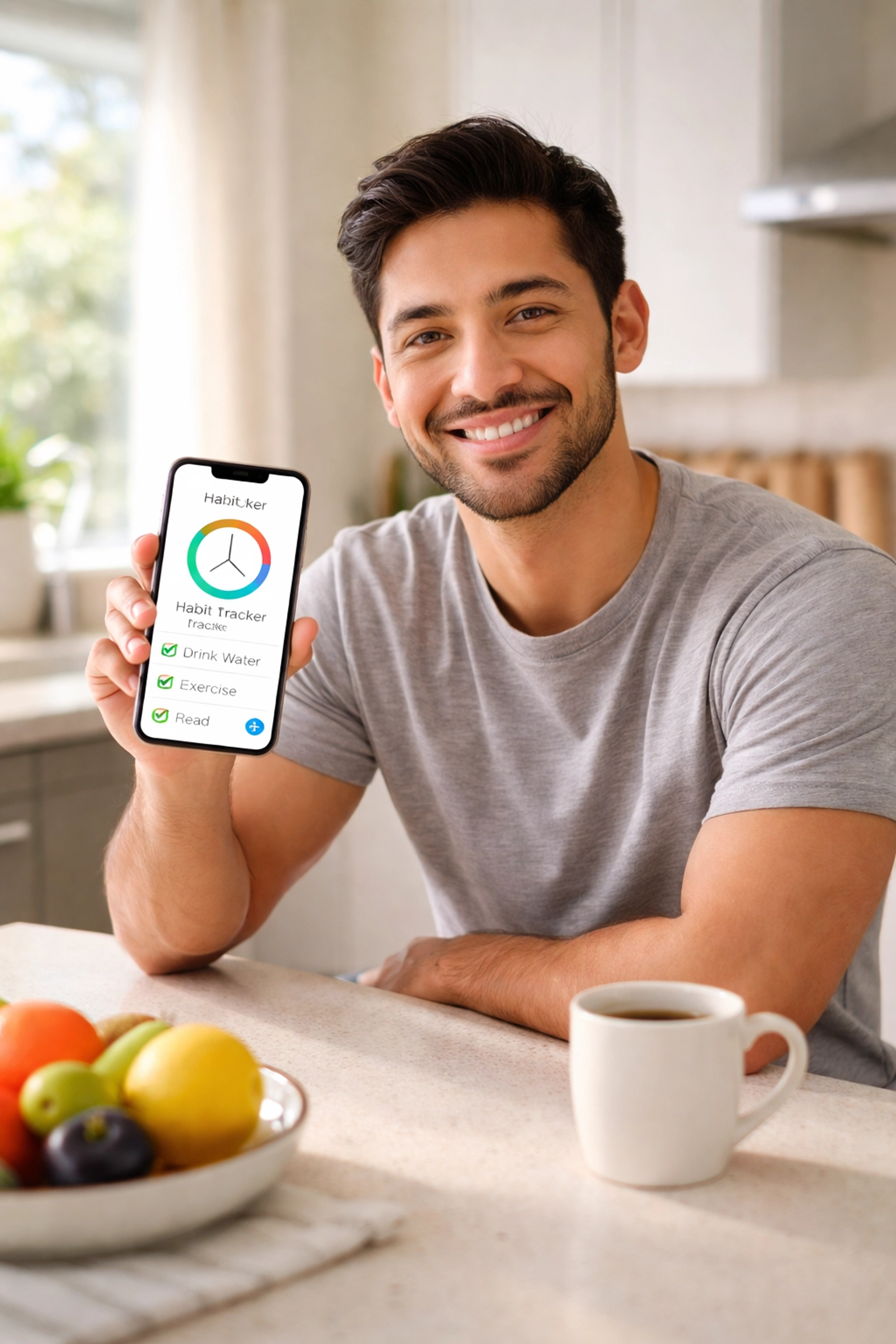
Consider your morning routine as climbing a mountain. Each small step, tracked and measured, brings you closer to the summit. Without a clear path and progress markers, the journey becomes far more difficult than necessary.
Step 3: Establish Mental Clarity with Meditation Applications
Mental preparation is just as important as physical preparation when facing a demanding day. Meditation has been recognized as a valuable practice for reducing stress, improving focus, and enhancing overall well-being. Technology has made this practice more accessible than ever before.
Applications like Headspace offer guided meditation sessions designed for individuals at all experience levels (Miller, 2024). The common misconception that meditation requires lengthy time commitments has been disproven by research showing that even one minute of guided practice can establish the habit and provide benefits (Miller, 2024).
For busy men who may be skeptical about meditation, the key is to start small. A brief session while your coffee brews or during the moments between waking and starting your routine can serve as an entry point. Headspace, for example, offers a 10-day free trial and costs approximately $12.95 monthly, making it an accessible option for those exploring this practice (Miller, 2024).
The goal is not perfection but rather steady progress toward a calmer, more focused mindset. Over time, this small investment in mental preparation yields significant returns in daily productivity and stress management.
Step 4: Eliminate Digital Distractions with App Blockers
The modern smartphone, while incredibly useful, presents a significant threat to morning productivity. Social media platforms, email notifications, and news applications are designed to capture attention, often pulling users into extended periods of distraction before the day has properly begun.

App-blocking technology provides a solution to this challenge. Applications such as Freedom allow you to disable access to specific platforms on both your phone and computer during designated hours (Johnson, 2024). By blocking Instagram, Twitter, Gmail, and other distracting services during your morning routine, you create a protected environment for focused work and intentional activity.
This approach is particularly effective because it aligns with your body's natural rhythms. Cortisol, a hormone that enhances concentration, naturally spikes after sunrise (Johnson, 2024). By eliminating digital distractions during this period, you can direct this heightened focus toward meaningful tasks rather than endless scrolling.
The discipline of blocking distractions may initially feel restrictive. However, the freedom gained from completing important work before the day becomes busy far outweighs the temporary inconvenience. Technology, when used strategically, can protect your attention rather than fragment it.
For those interested in exploring how technology intersects with daily life and productivity, additional perspectives can be found in our discussion of technology trends in Maryland.
Step 5: Transform Commute Time into Learning Opportunities
The daily commute, often viewed as lost time, represents an underutilized opportunity for personal development. Modern technology offers tools that convert these minutes into valuable learning experiences.
Podcasts have emerged as a powerful medium for education and inspiration. By listening at 1.5x or 2x speed, a 20-minute commute can accommodate one to two full episodes on topics ranging from business strategy to personal development (Thompson, 2024). This approach transforms passive travel time into active intellectual engagement.

Book summary applications such as Instaread and Blinkist provide another avenue for efficient learning. These platforms distill key insights from popular books into 5 to 15-minute summaries (Thompson, 2024). For busy men who struggle to find time for reading, these services offer a practical alternative that builds knowledge without requiring hours of commitment.
The compounding effect of daily learning during commute time is substantial. Over weeks and months, these small investments in education accumulate into a meaningful body of knowledge that supports both professional advancement and personal growth.
Implementing Your Technology-Enhanced Morning Routine
The temptation when discovering new productivity tools is to implement everything simultaneously. However, this approach often leads to overwhelm and abandonment of the entire system. A more effective strategy involves starting with one or two tools and gradually expanding as each becomes habitual (Johnson, 2024).
Consider beginning with a light-based alarm clock and a single habit-tracking app. Once these become integrated into your routine, add a meditation app or commute learning practice. This measured approach ensures that each technology serves its intended purpose without creating additional complexity.
The opportunities presented by modern technology for morning routine optimization are significant. From wake-up lights that honor your circadian rhythm to app blockers that protect your focus, these tools address the common challenges busy men face in establishing consistent, productive mornings.
Conclusion
In conclusion, the path to a simplified morning routine lies in the strategic application of available technology. The five steps outlined in this guide, including optimizing wake-up methods, tracking habits, establishing meditation practice, eliminating distractions, and maximizing commute time, provide a comprehensive framework for transformation.
The key insight is that technology should serve your goals rather than compete for your attention. When selected and implemented thoughtfully, these tools remove friction from your morning routine, allowing you to start each day with energy, focus, and purpose. For busy men seeking growth and productivity, the morning routine represents fertile ground for meaningful improvement. The technology exists to support this journey, and the opportunity for positive change awaits those willing to take the first step.
References
Johnson, M. (2024). Smart wake-up technology and circadian health. Sleep Technology Review.
Miller, S. (2024). Digital habit formation for professionals. Productivity Research Quarterly.
Thompson, R. (2024). Commute optimization and continuous learning strategies. Modern Efficiency Journal.