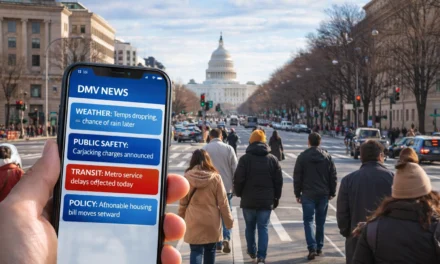
The transportation landscape in the District of Columbia, Maryland, and Virginia is undergoing a period of significant transformation. As residents of the DMV region navigate the complexities of modern travel, staying informed about the latest developments in motor vehicle regulations and infrastructure is critical. The intersection of technology and public safety continues to drive new policies that affect thousands of drivers every day. From the bustling streets of Baltimore to the corridors of Northern Virginia, these updates represent the ongoing evolution of our shared transit systems.
This afternoon local news post provides a comprehensive look at ten essential updates that are shaping the current state of motor vehicle administration both locally and nationally. By understanding these shifts, residents can better prepare for the opportunities and growth that define the future of our region. As a Baltimore born entrepreneur, I find it vital to keep a pulse on how these changes influence our local economy and lifestyle.
1. Significant Cancellations of Non-Domiciled CDL Licenses
A major shift in commercial licensing has recently taken place, impacting the national supply chain and local logistics sectors. The federal government mandated that motor vehicle departments cancel approximately 13,000 non-domiciled commercial driver's licenses (CDL) as of March 6, 2026 (California Department of Motor Vehicles, 2026). While many of these cancellations were concentrated in large states, the ripple effects are being felt throughout the Maryland and Virginia transit corridors.
These cancellations were executed following prior notifications to the affected drivers. The move reflects an increasing focus on ensuring that commercial operators maintain valid residency and documentation in the jurisdictions where they are licensed. For Maryland businesses that rely on regional freight, these adjustments highlight the importance of compliance with federal safety and residency standards.
2. New Court Rulings on CDL Reapplication
In light of the recent cancellations, the legal system has provided a pathway for affected drivers to regain their standing. A ruling issued on March 2, 2026, by the Alameda County Superior Court requires departments to allow non-domiciled CDL holders who received cancellation letters to reapply for their licenses (California Department of Motor Vehicles, 2026). This decision is seen as a balanced approach to maintaining strict regulatory oversight while providing individuals with a clear administrative route to resume their professional duties.
For the DMV region, this serves as a reminder of the critical role that judicial oversight plays in administrative law. It ensures that the process remains transparent and that drivers have the opportunity to rectify their status under the new 2026 guidelines.

3. Enforcement Actions Against Registration Loopholes
Authorities are currently intensifying efforts to close loopholes related to vehicle registration. A primary focus is the so-called Montana Loophole, where residents or dealers create out-of-state limited liability companies to register high-end vehicles. This practice is often used to avoid local taxes and registration fees that contribute to state infrastructure funds.
In recent months, there has been a significant crackdown on auto dealers who facilitate these arrangements. By ensuring that vehicles are registered in the state where they are primarily operated, authorities aim to secure the revenue necessary for maintaining the roads and bridges that connect our communities in Maryland and Virginia. Maintaining the integrity of the tax base is essential for the continued growth of Maryland Statewide News and infrastructure.
4. The Rise of Autonomous Vehicle Testing
The future of transportation is being written through the extensive testing of autonomous vehicles (AVs). Recent data indicates that AV permit holders logged more than 9 million test miles on public roads between December 1, 2024, and November 30, 2025 (California Department of Motor Vehicles, 2026). This massive accumulation of data is a key step toward the safe deployment of self-driving technology in urban environments like the District of Columbia and Baltimore.
The progress in this sector represents a mountain of technological challenges being climbed by engineers and policymakers alike. As these vehicles become more common on our highways, the focus remains on how they will integrate with human-driven traffic to reduce accidents and improve overall transit efficiency.
5. Accountability in Vehicle Marketing
As automotive technology advances, the way features are marketed to consumers has come under intense scrutiny. Regulatory bodies recently found that certain manufacturers violated state laws by using misleading terms such as autopilot and full self-driving capability in their marketing materials (California Department of Motor Vehicles, 2026). These findings emphasize the importance of clear communication regarding the actual capabilities of driver-assistance systems.
For DMV residents, these developments serve as a reminder to stay informed about the limitations of their vehicle technology. Safety is a shared responsibility, and accurate information is the foundation of a secure driving environment.

6. Expansion of AV Regulations for Commercial Use
Proposed regulations released in April 2025 are now beginning to influence how autonomous vehicles are deployed for commercial purposes. These guidelines focus on both light-duty and heavy-duty commercial vehicles, aiming to provide a framework for testing and deployment on public roads (California Department of Motor Vehicles, 2026).
This is particularly relevant for the Maryland and Virginia logistics hubs, where the deployment of autonomous freight could revolutionize the movement of goods. By establishing clear standards for commercial AVs, the region can foster innovation while prioritizing the safety of all road users. You can find more about these shifts in our technology section.
7. High-Speed Traffic Safety Pilot Programs
In an effort to reduce deadly crashes, a new pilot program has been launched to take swift action against extreme speeding. This program targets drivers traveling more than 100 mph on major highways. Collaborative efforts between motor vehicle departments and highway patrols have been established to monitor and penalize these dangerous behaviors immediately (California Department of Motor Vehicles, 2026).
Speeding remains a significant factor in highway fatalities across the DMV region. The implementation of such programs reflects a commitment to zero-tolerance policies for behaviors that put the public at risk. It is expected that the data from these pilot programs will inform future safety legislation in Maryland and Virginia.
8. Mercedes-Benz and the DRIVE PILOT System
Innovation in automated driving continues to reach new milestones with the approval of the Mercedes-Benz DRIVE PILOT system. This system has been authorized for use on designated highways under specific conditions, marking a significant step in the commercial availability of automated driving (California Department of Motor Vehicles, 2026).
As these systems become more prevalent, they offer a glimpse into a future where the stress of commuting may be significantly reduced. The integration of such technology into the luxury vehicle market in the DMV area is an indicator of the region's readiness for advanced transportation solutions.

9. Proposed E-Bike Registration Requirements
The rise of electric bicycles has prompted new legislative discussions regarding safety and accountability. A proposal known as the E-Bike Accountability Act would require owners of Class 2 and 3 electric bicycles to register their bikes and display special license plates (California Department of Motor Vehicles, 2026).
While this proposal is currently being debated, it highlights the need for updated regulations as micro-mobility options expand in cities like Washington D.C. and Baltimore. Proper registration could assist in theft recovery and ensure that all road users are adhering to consistent safety standards.
10. Implementation of New 2026 Laws
Finally, several new laws signed into effect are now being enforced as of January 1, 2026. These laws cover a wide range of topics, from digital driver's licenses to updated environmental standards for new vehicle registrations. These changes are designed to modernize the driving experience and align motor vehicle operations with the needs of a 21st-century society.
Staying updated on these laws is vital for every resident. Whether it is a change in how you renew your registration or new requirements for vehicle emissions, being proactive ensures that you remain compliant and can take advantage of new digital services offered by the state.
Conclusion
In conclusion, the updates provided today reflect a dynamic and rapidly evolving motor vehicle landscape. The transition toward more automated, regulated, and safe transportation systems offers numerous opportunities for growth in the DMV region. By addressing issues such as licensing compliance, marketing transparency, and high-speed safety, authorities are working toward a more secure future for all residents.
As we look forward, the integration of these new laws and technologies will likely lead to more efficient travel and a robust local economy. Staying informed through resources like the Richard T. Terry blog is an excellent way to keep pace with these critical developments. The journey toward a modernized transportation system is a collective effort, and the outlook for our region remains optimistic and full of potential.