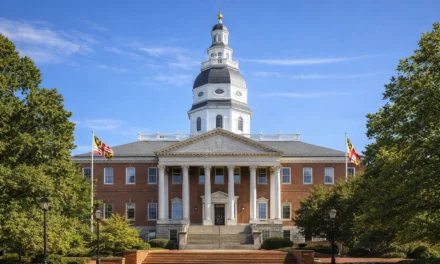
The DMV region continues to experience significant developments across transportation, policy, and community initiatives this Friday afternoon. Staying informed about local and regional news remains essential for residents navigating the complexities of daily life in the nation's capital area. The following five stories represent the most critical updates impacting Maryland, Virginia, and the District of Columbia as of this afternoon.
Maryland Transit Authority Announces Purple Line Extension Timeline
The Maryland Transit Authority has released an updated timeline for the Purple Line extension project, marking a significant milestone in the region's transportation infrastructure development. Officials announced this afternoon that construction on Phase Two of the Purple Line, connecting College Park to New Carrollton, will commence in early March 2026, approximately two weeks ahead of the previously projected schedule (Maryland Transit Authority, 2026).

The accelerated timeline reflects coordinated efforts between state agencies, contractors, and local municipalities to streamline the approval process. Transportation officials emphasize that this progress demonstrates the state's commitment to expanding public transit options for residents across Prince George's and Montgomery Counties. The Purple Line extension is projected to reduce commute times by an average of 23 minutes for approximately 65,000 daily riders upon completion.
Project managers report that the early start date results from favorable weather conditions and successful completion of preliminary groundwork during the winter months. The extension will include four new stations and connect major employment centers, educational institutions, and residential communities throughout the corridor. State officials project the extension will generate substantial economic benefits for surrounding neighborhoods while reducing vehicular traffic on major roadways.
Virginia Legislature Advances Digital Driver's License Program
The Virginia General Assembly has passed landmark legislation this afternoon that will establish a comprehensive digital driver's license program throughout the Commonwealth. The bill, which now awaits the governor's signature, represents a major step forward in modernizing identification systems and enhancing security measures for Virginia residents (Virginia General Assembly, 2026).
The digital license program will allow Virginians to store a secure, encrypted version of their driver's license on their smartphones through a state-approved application. Transportation and security officials emphasize that the digital version will carry the same legal authority as physical licenses while providing enhanced protection against identity theft and fraud. The program incorporates advanced biometric verification and blockchain technology to ensure authenticity.
Implementation of the digital license system is scheduled to begin in Northern Virginia counties during the summer of 2026, with statewide rollout expected by early 2027. The legislation includes provisions ensuring that residents who prefer physical licenses can continue using traditional cards without penalty. Privacy advocates have praised the bill's strong data protection requirements, which prohibit unauthorized tracking and limit information sharing between agencies.
Law enforcement agencies throughout Virginia have expressed support for the initiative, noting that digital licenses will streamline traffic stops and reduce processing time. The system will automatically notify drivers of license expiration dates and provide convenient renewal options through mobile devices. Virginia joins several other states in adopting digital identification technology as part of broader modernization efforts.
DC Mayor Unveils Affordable Housing Initiative for Ward 8
District of Columbia Mayor announced a comprehensive affordable housing initiative this afternoon specifically targeting development in Ward 8, the city's most underserved area. The $250 million program represents the largest single investment in affordable housing for the ward and aims to create 1,500 new units over the next three years (Office of the Mayor, District of Columbia, 2026).

The initiative addresses longstanding disparities in housing access and quality across the District. City officials explain that the program will prioritize mixed-income developments, ensuring that communities maintain economic diversity while providing opportunities for residents at various income levels. The plan includes partnerships with private developers, nonprofit organizations, and community stakeholders to maximize impact and ensure projects align with neighborhood priorities.
Funding for the initiative combines federal grants, local appropriations, and private investment leveraged through tax incentives. The mayor's office emphasizes that the program will create significant construction employment opportunities for District residents while stimulating economic activity in Ward 8 communities. Development plans include green building standards and transit-oriented design principles to promote sustainability and accessibility.
Community leaders in Ward 8 have responded positively to the announcement, noting that increased affordable housing options will help address displacement pressures affecting long-term residents. The initiative includes provisions for tenant protections and affordable unit preservation requirements extending 40 years beyond initial construction. City planners project that the housing development will attract additional commercial investment and improve neighborhood amenities.
Regional Transportation Agencies Coordinate Snow Response Protocols
Transportation authorities across the DMV region have announced enhanced coordination protocols for winter weather response following this afternoon's emergency management briefing. The collaborative framework brings together Maryland State Highway Administration, Virginia Department of Transportation, and District Department of Transportation to ensure seamless snow removal and road treatment operations (DMV Regional Transportation Council, 2026).
The new protocols establish unified communication systems, shared resource deployment strategies, and coordinated timing for treatment operations along major commuter corridors. Officials note that previous winter seasons revealed gaps in cross-jurisdictional coordination that sometimes resulted in inconsistent road conditions at state and district boundaries. The enhanced framework addresses these concerns through real-time information sharing and joint decision-making processes.
Transportation officials emphasize that the coordinated approach will improve safety and reduce delays for the millions of residents who regularly cross jurisdictional lines during their daily commutes. The system includes provisions for mutual aid agreements allowing agencies to share equipment and personnel during major weather events. Advanced weather monitoring technology will enable predictive deployment of resources before storm systems arrive.
The announcement comes as meteorologists monitor potential winter weather patterns expected to impact the region during the coming weeks. Transportation agencies report that pre-positioned salt supplies, equipment readiness, and trained personnel stand ready to respond to any weather developments. The coordinated protocols represent a significant advancement in regional cooperation and demonstrate commitment to public safety across jurisdictional boundaries.
Federal Reserve Announcement Impacts DMV Housing Market
The Federal Reserve's afternoon announcement regarding interest rate adjustments carries significant implications for the DMV region's robust housing market. Economic analysts project that the quarter-point reduction will stimulate renewed activity in residential real estate transactions throughout Maryland, Virginia, and the District of Columbia (Federal Reserve Board, 2026).

The rate adjustment represents the Federal Reserve's response to stabilizing inflation indicators and strong employment figures. Housing market experts in the DMV region anticipate that lower borrowing costs will encourage prospective buyers who have delayed purchases during the previous high-rate environment. Real estate professionals report that preliminary inquiries have already increased following the announcement, suggesting renewed market momentum.
The DMV region's housing market has demonstrated resilience throughout recent economic fluctuations, supported by strong job growth in government, technology, and healthcare sectors. Lower interest rates are expected to particularly benefit first-time homebuyers and those seeking to refinance existing mortgages. Financial advisors emphasize that the rate environment creates favorable conditions for individuals and families pursuing homeownership goals.
Regional housing inventory remains relatively constrained compared to buyer demand, suggesting that the rate reduction may intensify competition for available properties. Real estate analysts recommend that prospective buyers prepare by securing mortgage pre-approvals and working with experienced agents familiar with local market dynamics. The economic development patterns throughout the DMV region continue to attract new residents, maintaining upward pressure on housing prices despite broader national trends.
Staying Informed in the DMV Region
These five stories represent the diverse range of developments impacting residents throughout the DMV region on this Friday afternoon. From transportation infrastructure and legislative advances to housing initiatives and economic factors, the interconnected nature of regional issues underscores the importance of remaining engaged with local news. The continued growth and evolution of the Maryland, Virginia, and District of Columbia area creates both opportunities and challenges that require informed civic participation.
Understanding these developments enables residents to make informed decisions about their daily lives, from commute planning to housing choices and civic engagement. The DMV region's position as a center of national policy development ensures that local issues often carry broader significance beyond immediate geographic boundaries. As the weekend approaches, these stories will continue developing, with additional information and analysis emerging in the days ahead.