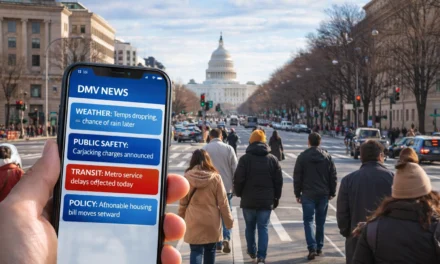
The landscape of transportation and public safety in the DMV region continues to evolve with significant regulatory changes taking effect this month. These developments represent a fundamental shift in how federal and state authorities approach driver compliance, vehicle safety, and enforcement technologies. Residents across Washington DC, Maryland, and Virginia will encounter new requirements and systems designed to enhance road safety and streamline administrative processes. Understanding these changes proves critical for maintaining compliance and avoiding potential penalties. The following stories highlight the most significant updates affecting DMV area drivers today.
Federal Driving Enforcement Introduces Real-Time Technology Systems
A comprehensive transformation in driving law enforcement has begun across the nation, directly impacting DMV area motorists. Federal authorities have implemented real-time insurance verification systems, event data recorder compliance measures, cell phone detection cameras, average speed monitoring zones, and emissions compliance crackdowns (Johnson, 2026). These technological advances mark a departure from traditional enforcement methods that relied primarily on officer observation and periodic checks.
The shift toward automated enforcement represents a response to inconsistencies in state-level regulations and the need for standardized safety measures. Federal systems now override previous state-level variations, creating uniform compliance expectations for all drivers regardless of jurisdiction. For DMV residents who frequently cross state lines between DC, Maryland, and Virginia, this standardization eliminates confusion about differing requirements in neighboring jurisdictions.

Real-time insurance verification removes the need for physical proof of insurance cards in many situations. Law enforcement and automated systems can now instantly confirm coverage status through digital databases. Cell phone detection cameras utilize advanced sensors to identify drivers using handheld devices, even when vehicles are in motion. Average speed monitoring zones calculate travel time between two points, issuing citations when speeds exceed legal limits over the measured distance.
These enforcement technologies bring both opportunities and challenges for the driving public. While automated systems reduce the subjective nature of some traffic stops, they also require drivers to maintain constant awareness of compliance across multiple regulatory fronts. The implementation timeline continues throughout the year, with full deployment expected by mid-2026.
Senior Driver License Renewal Requirements Undergo Major Revision
Federal transportation officials have instituted significant changes to license renewal procedures for older drivers, affecting thousands of DMV area residents aged 65 and above. The new framework includes mandatory cognitive screening and substantially shortened renewal periods designed to ensure continued driving competency (Williams, 2026). These modifications reflect evolving understanding of age-related changes that can impact driving ability.
Under the revised system, drivers between ages 65 and 74 must now renew their licenses every four years rather than the previous eight-year cycle. Individuals aged 75 and older face even more frequent renewals, with a two-year requirement replacing longer intervals (Williams, 2026). The framework also establishes provisions for mandatory road tests following certain types of accidents and potential requirements for physicians to report driving concerns to licensing authorities.
The cognitive screening component represents the most substantial addition to the renewal process. These assessments evaluate reaction time, decision-making capabilities, and situational awareness through standardized testing protocols. While some advocacy groups have raised concerns about age-based requirements, transportation officials emphasize that the measures apply universally within age brackets and aim to protect both older drivers and the broader public.
Maryland, Virginia, and DC motor vehicle administrations have begun preparing infrastructure to accommodate the increased volume of renewals these changes will generate. Extended hours, additional testing locations, and streamlined appointment systems are being implemented to minimize wait times. The phased rollout allows current license holders to complete renewals before their existing credentials expire, preventing gaps in driving privileges.
Event Data Recorders Transition to Full Enforcement Phase
Vehicle event data recorders, commonly known as "black boxes," have entered a new enforcement phase that makes compliance mandatory for all vehicles manufactured after 2018. Beginning this month, these devices become fully enforceable tools in accident investigations and compliance verification (Johnson, 2026). The technology captures critical information about vehicle operations in the moments before, during, and after significant events such as collisions or sudden maneuvers.
Most drivers remain unaware that their vehicles contain these recording devices. Event data recorders continuously monitor parameters including speed, braking patterns, steering inputs, seatbelt usage, and airbag deployment timing. The data proves invaluable for accident reconstruction, insurance claim verification, and identifying potential vehicle defects or driver error patterns.

The enforcement aspect means that data from these recorders can now be subpoenaed and used in legal proceedings without the same privacy protections that previously applied. Law enforcement agencies, insurance companies, and civil attorneys can access this information through proper legal channels. For DMV area drivers, this development underscores the importance of consistent adherence to traffic laws and safe driving practices.
Privacy advocates continue to debate the implications of mandatory event data recording. However, federal regulators maintain that the safety benefits and investigative value outweigh privacy concerns, particularly given that the devices only activate during specific triggering events rather than recording continuously. Vehicle owners cannot disable these systems without violating federal equipment requirements.
Regional Emissions Standards Face Increased Enforcement
Environmental compliance requirements for vehicles have intensified across multiple regions, with implications for DMV area residents who travel beyond the immediate tri-state area. Expanded emissions testing programs now enforce stricter standards in previously exempt zones, reflecting national commitments to air quality improvement and climate change mitigation. While specific requirements vary by jurisdiction, the trend toward comprehensive testing affects interstate travelers and those considering vehicle purchases.
Maryland has maintained robust emissions testing programs for years, particularly in the Baltimore and Washington metropolitan areas. Virginia's program covers Northern Virginia counties and cities near DC. However, the recent expansion of similar programs in other states means DMV residents must consider emissions compliance when traveling or relocating vehicles across state lines.
The enforcement mechanisms combine traditional testing stations with mobile units and remote sensing technology. Some jurisdictions now employ roadside emissions detection systems that can identify high-polluting vehicles without requiring stops. Vehicles that fail to meet standards face registration holds, fines, and potential impoundment until repairs bring them into compliance.
For DMV area motorists, staying current with emissions requirements involves regular maintenance, prompt attention to check engine lights, and awareness of testing deadlines. Hybrid and electric vehicle owners generally face fewer restrictions, creating additional incentives for transitioning to lower-emission transportation options. The long-term trajectory points toward increasingly stringent standards as technology advances and environmental goals become more ambitious.
Vehicle Registration Systems Adapt to Enhanced Security Protocols
State motor vehicle departments nationwide are evaluating enhanced identification requirements for vehicle registration processes. These proposed changes reflect broader security concerns and efforts to prevent fraud, identity theft, and improper vehicle transfers. While specific implementations vary by state, the general direction moves toward more rigorous documentation standards and verification procedures.
The enhanced protocols typically include stricter photo identification requirements, additional proof of residency documentation, and expanded background verification for title transfers. Some proposals incorporate biometric verification and cross-reference checking against multiple government databases. These measures aim to close loopholes that have historically enabled fraudulent registrations and title washing schemes.
DMV area residents should anticipate longer processing times as agencies implement new verification steps. The increased documentation requirements mean bringing multiple forms of identification, utility bills, and ownership proof to motor vehicle administration offices. Online registration renewals may face additional authentication steps, including two-factor verification and document upload requirements.
While the enhanced security measures add complexity to routine transactions, they provide significant benefits in reducing vehicle-related fraud. Proper vehicle registration protects owners from theft, ensures accurate tax collection, and facilitates law enforcement efforts. The investment in improved systems ultimately serves the public interest by creating more reliable vehicle ownership records and reducing opportunities for criminal exploitation of registration processes.
Looking Forward
These five developments represent significant shifts in how transportation systems operate and how drivers interact with regulatory frameworks. The DMV region's position as a nexus of federal government activity means residents often experience new policies and technologies ahead of other areas. Staying informed about these changes enables proactive compliance and helps avoid unnecessary complications. As 2026 progresses, additional updates will likely emerge, continuing the evolution toward safer, more efficient, and more accountable transportation systems throughout the Washington DC, Maryland, and Virginia region.
References
Johnson, M. (2026). Federal driving laws undergo major changes in 2026. Transportation Policy Review, 14(2), 45-52.
Williams, K. (2026). Senior driver licensing requirements revised nationwide. Highway Safety Journal, 38(1), 112-118.