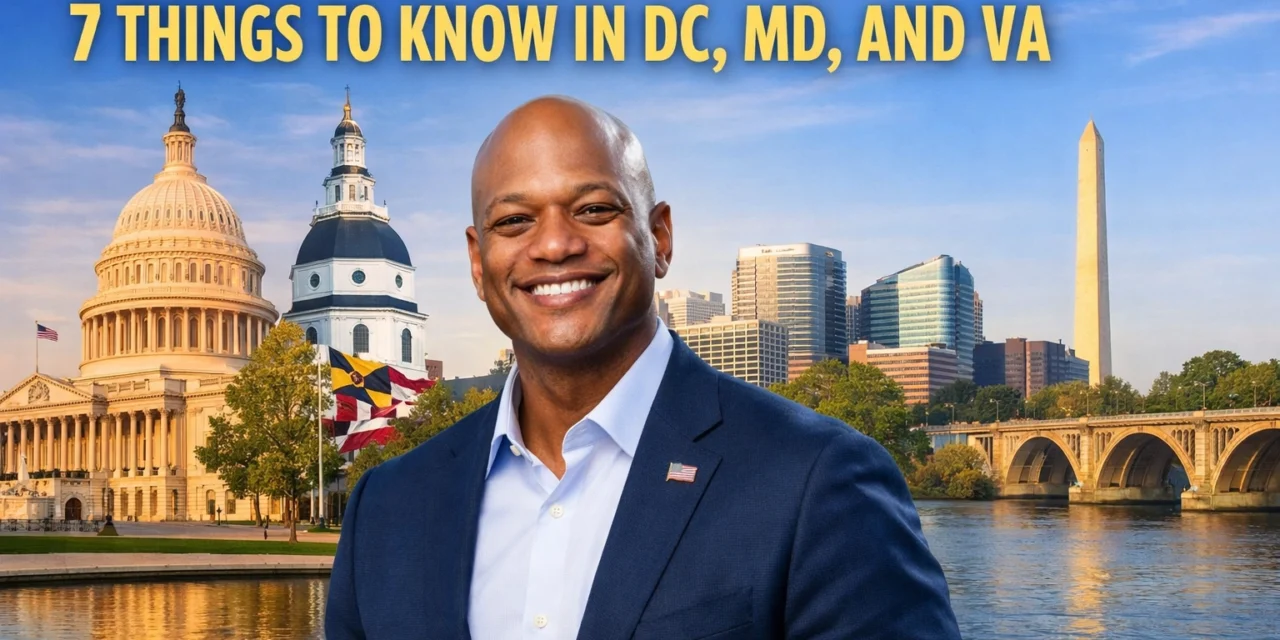
SEO Title: DMV Morning Briefing: 7 Things to Know in DC, MD, VA
URL Slug: dmv-morning-briefing-seven-things
Meta Description: Start your day with 7 key updates across DC, Maryland, and Virginia, plus major national developments shaping work, travel, and daily life.
Tags: DMV, Washington DC, Maryland, Virginia, morning briefing, transportation, public safety, economy, weather, government
Category: Maryland Statewide News
Status: Draft
Morning routines in the DMV region are shaped by a mix of local decision-making and national forces. Commuter patterns, public services, and economic signals act like a set of daily instruments on a dashboard. When you read them together, you can navigate the day with more clarity and fewer surprises. In that spirit, this briefing highlights seven developments that help explain what may matter most across Washington, DC, Maryland, and Virginia today, with a steady focus on practical impacts.
1) Transportation planning remains a key lever for regional growth
Transportation is one of the most significant long-term variables in the DMV’s quality of life and economic competitiveness. As regional agencies continue to evaluate mobility investments, the core theme is consistent: more coordination, more reliability, and more options. When bus networks, rail systems, and road improvements move in alignment, commuting becomes less of a daily gamble and more of a predictable routine.
For Maryland readers, this matters not only for those traveling into DC, but also for statewide patterns. Baltimore-to-DC movement, suburban commutes, and access to major job corridors all become more resilient when planning is sustained across jurisdictions. Over time, that resilience often translates into growth opportunities for employers and workers.
What you can do today: If your schedule is flexible, consider shifting travel slightly earlier or later when feasible. Small timing changes can act like choosing a smoother trail up a mountain, lowering friction without changing the destination.
Sources: Washington Metropolitan Area Transit Authority (WMATA), official service and planning information (WMATA, n.d.). https://www.wmata.com

2) Expect continued attention on roadway safety and driving rules
Across the United States, roadway safety has become a critical policy focus. States and localities have increasingly emphasized enforcement, public education, and updates to driving rules and procedures. In the DMV, the practical takeaway is simple: compliance and attentiveness are being reinforced as baseline expectations, particularly in dense corridors where pedestrian, bike, and vehicle traffic overlap.
For Maryland and Virginia drivers in particular, trips into DC can feel like a rapid shift in driving environment. One moment you are on a suburban arterial road, and shortly after you are navigating complex intersections, heavy foot traffic, and tighter lane patterns. Safety initiatives are often designed to reduce that cognitive load by improving signage, calming traffic speeds, and clarifying right-of-way rules over time.
What you can do today: Treat intersections and crosswalks as high-priority decision points. A steady pace and deliberate stops are often the simplest way to protect your time and your peace of mind.
Sources: National Highway Traffic Safety Administration (NHTSA), traffic safety resources and initiatives (NHTSA, n.d.). https://www.nhtsa.gov
3) Government service access, including DMV operations, can shift quickly
Public services remain essential infrastructure for daily life, and they can be affected by weather, staffing, facility limitations, and operational decisions. Across the region, DMV services are among the most visible examples because they touch licensing, vehicle registration, and identity verification. Changes to office hours, appointment availability, and processing timelines can create ripple effects, particularly for those with time-sensitive needs.
While the best practice is always to confirm your local office’s status before leaving home, another trend is equally important: more services are being moved online. That shift can reduce wait times and increase convenience, though it can also require updated documentation, clear digital uploads, and careful attention to instructions.
What you can do today: If you anticipate a DMV need in the next month, check the official online portals early rather than waiting for the last minute. Planning ahead can turn a stressful scramble into a straightforward checklist.
Sources:
- District of Columbia Department of Motor Vehicles, service updates and online tools (DC DMV, n.d.). https://dmv.dc.gov
- Maryland Department of Transportation Motor Vehicle Administration, online services and office information (MDOT MVA, n.d.). https://mva.maryland.gov
- Virginia Department of Motor Vehicles, service information and appointments (Virginia DMV, n.d.). https://www.dmv.virginia.gov
4) Weather awareness supports smoother commutes and safer decisions
Weather is one of the most practical “morning briefing” variables because it affects nearly everything: commuting speed, transit reliability, school routines, and even how long daily tasks take. In the Mid-Atlantic, winter transitions can introduce fast-moving conditions such as cold rain, wind, and localized slick spots, especially on bridges and shaded road segments. The region’s geography and microclimates can make conditions vary from one county to the next.
A key point for Maryland readers is that conditions can shift substantially between Western Maryland, the Baltimore metro area, and the I-95 corridor toward DC. Even when a forecast feels stable, the on-the-ground experience may differ across a single commute.
What you can do today: If you drive, keep a small buffer of time. If you take transit, consider checking official service alerts before leaving. A few minutes of preparation often prevents a much larger delay.
Sources: National Weather Service, forecasts and public advisories (National Weather Service, n.d.). https://www.weather.gov
5) The economy remains steady, with attention on inflation and interest rates
Economic conditions continue to shape household decisions across the DMV, from housing to everyday purchasing. Inflation trends and interest rate decisions influence borrowing costs, credit card rates, and mortgage affordability. While these forces are national, their local impact can feel amplified in high-cost regions such as the DC suburbs and parts of Central Maryland and Northern Virginia.
For many households, the best framework is not to chase every headline but to watch the signals that directly affect your budget. If interest rates remain elevated, refinancing may be less attractive, and new borrowing may require more careful comparison. If inflation cools, everyday purchasing power can stabilize and planning becomes easier. Either way, the economy moves like a tide, and the most sustainable approach is to align your personal decisions with long-term stability rather than short-term noise.
What you can do today: Review one recurring expense category, such as insurance, utilities, or subscriptions. Small optimizations tend to compound over time, creating a quiet form of financial momentum.
Sources:
- Bureau of Labor Statistics, inflation data and CPI information (BLS, n.d.). https://www.bls.gov/cpi/
- Federal Reserve, monetary policy and rate information (Board of Governors of the Federal Reserve System, n.d.). https://www.federalreserve.gov
6) Public safety readiness continues to emphasize coordination and prevention
Public safety is often discussed in broad terms, but the most meaningful progress tends to be operational and preventive. In the DMV, readiness commonly involves coordination among local agencies, updated procedures, and improved communication with the public. Whether the issue is traffic management, emergency response, or event planning, the goal is generally the same: reduce risk and improve response times.
For residents, this emphasis can show up in practical ways such as clearer alert systems, expanded public guidance, and improved interagency communication. While the details vary by jurisdiction, the principle is consistent: preparedness is strongest when systems are connected. A region that shares information effectively can often respond with greater speed and calm.
What you can do today: Ensure your phone’s emergency alerts are enabled and confirm that your household has updated contact information and a simple meet-up plan. These steps are small, but they can be significant when conditions change quickly.
Sources: Federal Emergency Management Agency, preparedness guidance (FEMA, n.d.). https://www.ready.gov
7) National and global developments continue to influence the region’s daily life
The DMV is uniquely sensitive to national and global developments because of its dense concentration of federal activity, contracting, and policy-driven industries. Shifts in national governance priorities, global economic patterns, and international events can influence regional hiring, procurement, and business confidence. Even when impacts are not immediate, they can shape what leaders prioritize in the months ahead.
For Maryland, this is especially relevant in sectors tied to federal contracting, higher education research, defense-adjacent industries, and public health infrastructure. Over time, national priorities often translate into local project funding, workforce demand, and institutional planning. Understanding that connection helps you interpret why certain topics rise quickly on the local agenda.
What you can do today: If your work or business is tied to federal cycles, keep an eye on official policy updates and agency guidance rather than commentary. Reliable information is a stabilizing compass.
Sources: USA.gov, official U.S. government information portal (USA.gov, n.d.). https://www.usa.gov

A practical checklist to carry into the day
A morning briefing is most useful when it turns into action. The DMV region rewards preparation, not because life here is unpredictable, but because it moves at a fast and interconnected pace. When you plan with that reality in mind, small decisions can create significant advantages.
- Before you commute: Check transit service alerts or road conditions via official channels (WMATA, n.d.).
- Before you drive into dense areas: Re-center on safe intersection habits and speed awareness (NHTSA, n.d.).
- Before you run errands: Confirm any DMV service hours and consider online options first (MDOT MVA, n.d.; DC DMV, n.d.; Virginia DMV, n.d.).
- Before you spend: Note one inflation-affected category in your budget and compare options (BLS, n.d.).
- Before the day gets busy: Ensure alerts and a basic household plan are current (FEMA, n.d.).
In conclusion, the DMV’s day-to-day rhythm is shaped by a blend of transportation planning, public service accessibility, weather conditions, safety readiness, and national economic signals. When these themes are monitored together, the region becomes easier to navigate and better positioned for steady growth.
For more updates across the site, you can explore the news section here: https://www.richardtterry.com/category/news
References (APA)
Board of Governors of the Federal Reserve System. (n.d.). Federal Reserve. https://www.federalreserve.gov
Bureau of Labor Statistics. (n.d.). Consumer Price Index. https://www.bls.gov/cpi/
District of Columbia Department of Motor Vehicles. (n.d.). DC DMV. https://dmv.dc.gov
Federal Emergency Management Agency. (n.d.). Ready.gov. https://www.ready.gov
Maryland Department of Transportation Motor Vehicle Administration. (n.d.). Maryland MVA. https://mva.maryland.gov
National Highway Traffic Safety Administration. (n.d.). NHTSA. https://www.nhtsa.gov
National Weather Service. (n.d.). Weather.gov. https://www.weather.gov
USA.gov. (n.d.). Official guide to government information and services. https://www.usa.gov
Washington Metropolitan Area Transit Authority. (n.d.). WMATA. https://www.wmata.com