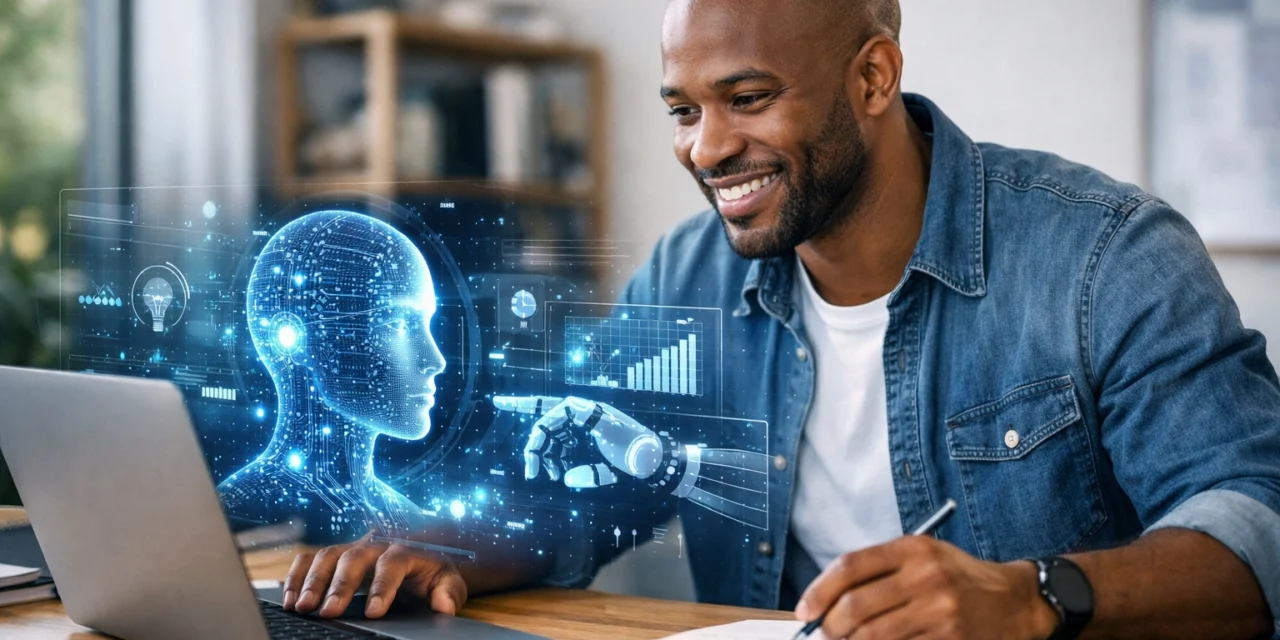
The rapid advancement of artificial intelligence represents a pivotal moment in the history of human productivity. For professionals across all industries, the integration of these technologies is not merely a trend but a fundamental shift in how tasks are conceptualized and executed. The journey toward a more automated world can be compared to climbing a mountain: while the ascent requires significant effort and a change in perspective, the view from the summit offers a landscape of unprecedented potential and clarity. As we navigate the complexities of digital culture and cybersecurity, it becomes evident that AI is the primary catalyst for a new era of professional growth.
In the context of Maryland Statewide News and global economic shifts, the conversation regarding artificial intelligence has moved beyond theoretical possibilities into practical application. The following analysis examines the critical ways in which new AI developments are transforming the workplace, the skills required to thrive, and the organizational structures that are emerging as a result.
The Evolution from Job Displacement to Job Transformation
A significant portion of the early discourse surrounding artificial intelligence focused on the fear of job elimination. However, recent data suggests a more optimistic reality defined by transformation rather than simple replacement. According to the World Economic Forum (2024), while approximately 92 million jobs may be displaced by 2030, the same period is expected to see the creation of 170 million new roles. This results in a net gain of 78 million positions worldwide.
The growth is particularly visible in sectors such as healthcare, education, the green economy, and technological literacy. Rather than rendering human workers obsolete, AI is acting as a tool that handles repetitive, data-heavy tasks. This shift allows employees to focus on high-value activities that require emotional intelligence and complex problem-solving. For those interested in how these trends manifest locally, more information can be found at https://www.richardtterry.com/technology-in-maryland.
The transformation of the labor market necessitates a proactive approach to career development. It is critical for workers to view AI as a partner. When machines take over the burden of manual data entry or basic scheduling, the human worker is elevated to the role of a strategist. This transition is essential for maintaining a competitive edge in an increasingly digital economy.

Enhancing Human-AI Collaboration
A common misconception regarding the digital workplace is that increased automation leads to human isolation. On the contrary, research indicates that human-AI collaboration is becoming the default standard for efficient workflows. Organizations are no longer choosing between human intuition and machine precision; they are designing systems that leverage both.
A study conducted by Deloitte (2024) found that a vast majority of workers across various age groups prefer a balanced mix of technological tools and human interaction. Furthermore, the Gensler 2026 Global Workplace Survey reveals an interesting trend: employees who utilize AI most frequently actually spend less time working alone. These individuals spend approximately 37% of their time in solitary work compared to 42% for late adopters of the technology (Gensler, 2026). The time saved through AI efficiency is being redirected toward learning and collaborating with teammates.
This collaborative model is evident in modern industrial applications as well. For example, the use of automated cooking machines at Atlanta facilities demonstrates how automation can streamline production while allowing human supervisors to focus on quality control and safety standards. AI is not isolating the worker; it is reshaping the workday to amplify human connection by removing the friction of routine tasks.
Essential Skills for the Modern Professional
As the nature of work changes, the skills required to succeed must also evolve. AI fluency is becoming a cornerstone of professional competence. The World Economic Forum predicts that 39% of the core skills currently required by workers will change by 2030 (World Economic Forum, 2024). At the top of the list for growing demand are AI literacy, big data analysis, and cybersecurity.
New job categories are emerging that did not exist a decade ago. Roles such as AI prompt engineers, machine learning specialists, and AI ethics officers are now critical components of the modern corporate structure. Even in traditional roles, the expectations are shifting. A customer service representative, for instance, may now be required to act as a collaboration specialist, managing the interface between AI chatbots and human clients to ensure a seamless experience.
Furthermore, the importance of "soft skills" has never been greater. Qualities such as empathy, ethical judgment, and creative thinking are areas where humans remain superior to machines. The most successful professionals in the coming years will be those who combine technical AI proficiency with these uniquely human capabilities. This synergy is a key driver of enhancing appearance and confidence in one's professional identity.

Structural Changes and Flattening Hierarchies
The influence of artificial intelligence extends beyond individual tasks and into the very architecture of organizations. AI systems are increasingly capable of handling middle-management duties such as performance monitoring, reporting, and resource allocation. Gartner (2024) predicts that through 2026, approximately 20% of organizations will utilize AI to flatten their organizational structures.
This flattening process often results in the elimination of traditional middle-management positions. While this can be disruptive, it also presents an opportunity for remaining leaders to shift their focus toward strategic planning and long-term value creation. Organizations face a critical challenge in maintaining leadership pipelines when the middle tiers of management are reduced.
This structural evolution demands a new type of leadership that is comfortable with data-driven oversight. Decisions that were once based on managerial intuition are now being supported by real-time analytics. As hierarchies become more horizontal, communication flows more freely, and the speed of decision-making increases. This trend is a significant component of the broader finance and progress in Maryland as companies adapt to leaner, more efficient operational models.
Data-Driven Workforce Planning and Decision-Making
AI is transforming how organizations forecast their needs and manage their staff. Instead of relying on historical trends or anecdotal evidence, businesses are using AI to analyze thousands of data points simultaneously. This includes production forecasts, employee turnover rates, and external labor market trends.
Proactive staffing allows companies to be more resilient in the face of economic fluctuations. By identifying exactly which tasks can be automated and which require human judgment, organizations can restructure workflows for maximum efficiency. This granular understanding of work allows for more personalized career paths for employees, as AI can identify skill gaps and recommend specific training modules to help workers advance.
In conclusion, the data-driven approach ensures that the right talent is in the right place at the right time. This level of precision was previously impossible, but it is now a standard expectation for high-performing enterprises.

Governance and Regulatory Landscapes
As artificial intelligence becomes more integrated into the workplace, the need for robust regulatory frameworks has become a priority for governments worldwide. The European Union AI Act is a primary example of this shift, classifying certain workplace AI uses, such as recruitment and performance evaluation, as high-risk activities. These classifications require strict transparency, human oversight, and the notification of workers.
Specifically, the use of emotion recognition technology in the workplace was banned under these frameworks, taking effect in February 2025 (World Economic Forum, 2024). These regulations are designed to protect worker rights and ensure that AI is used ethically and responsibly. For professionals and business owners, staying informed about these legal developments is essential for maintaining compliance and fostering a culture of trust.
The emergence of these frameworks signals that AI governance is no longer optional. Companies must be prepared to demonstrate that their AI systems are free from bias and that they respect the privacy of their employees. This commitment to ethics is a critical part of enhancing content and expanding reach in a responsible manner.
Conclusion
The new developments in artificial intelligence are fundamentally altering the professional world. From the transformation of job roles to the flattening of organizational structures, the impact is comprehensive and profound. While the challenges of this transition are significant, the opportunities for growth and innovation are even greater.
By embracing human-AI collaboration and committing to continuous skill development, workers and organizations can thrive in this new landscape. The future of work is not a choice between humans and machines, but rather a realization of what they can achieve together. In conclusion, staying optimistic and informed is the best strategy for navigating the exciting technological advancements that lie ahead.
For further insights into technology and professional development, visit our technology category.